
Will all animals one day be Out of #Africa?
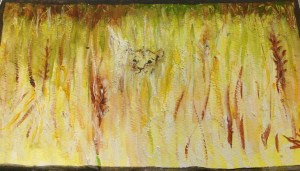
Out of Africa
As a child I learnt to see a lion’s ear, in the spear grass. I saw the leopard draped across the dappled tree. Attenborough’s Africa took me back to the place I was born.
Tsavo,Serengeti, Samburu, Nandi, Naivasha, Mombasa, Masai Mara,Malindi,Amboseli…the names are all there in my heart.
I wonder if my children will see the animals Africa shows us, in Africa, or only at Longleat? Will they see the subtle patterned coat of the reticulated giraffe, or the remarkable painted stripes of the Grevy’s zebra?
One day there will be a last wild lion waiting in the grass, so hard to spot, so at one with its surroundings. One day all the animals will have been taken out of Africa.
The Prior of the Taize Community which is in deep connection with young people from Africa and around the world, has said recently that believers need to talk together about faith, but also with agnostics and atheists.
One area that we need to talk with all others about, and form alliances and networks, is about the environment, the natural world, the living planet. The word Kalahari means ‘the great thirst’ – an apt name for a desert.
We are people consumed with a great thirst for the wrong things. We will make the world a desert. We are like the Cuckoo, there is only room in the earthnest for us.
Saving the earthnest will require a pilgrimage of trust in each other, those who believe in the quest.
We need hope. As one of Emily Dickinson’s poems (no. 623):
It was too late for Man-
But early, yet, for God-
Honey cakes of thanks to #Rowan Williams
Rowan Williams is due to step down as Archbishop of Canterbury at the end of the year. I don’t think he has been fully understood or appreciated during his 10 years in office.
I read his biography Rowan’s Rule by Rupert Shortt a while back. I understand that during his time at Canterbury he was sent faeces through the Royal Mail, by evangelical Christians. As Iconoclasts we seem to have lost the icon of dialogue and grace.
However, he also seems to have been seriously misrepresented on a number of issues. One of the problems is that theologically he is not easily put in any camp. But there is much in his thinking and writing that makes him a friend of evangelicals. He encouraged fresh expressions of church, is orthodox by conviction and has a high view of Scripture.
Although many comment on how hard some of his writing is to understand, because of the complexity of his theological language, it is because he is dealing with difficult questions in what he calls ‘critical’ theology. He tackles apologetic issues, questions our culture raises, in a subtle, poetic and highly intelligent manner – and speaks to people outside the church that black and white thinkers repulse. He sent a beautifully clear and charming letter to a six year old called Lulu, who had asked the question of God, ‘how did you get invented?’
In particular many find his spiritual writings like Silence and Honey Cakes, an exploration of the wisdom of the Desert Fathers and Mothers, luminous and helpful. Someone I know who has met the Archbishop says that he is a deeply spiritual man and has a charismatic presence with other people. Surely this is the real mark of a Christian – how they are face to face with real people, not how they are in the virtual world of the media?
I was at Worth Abbey a while back and a phrase of the Archbishop’s leapt off the page I was reading and shook me spiritually – it seemed to be no coincidence that just outside lightning and thunder were shaking the building.
He said that ‘Jesus Christ was a person in whom the freedom of God was completely at work.’ I asked myself, what would it mean for me, to be a person in whom the freedom of God was completely at work? I was left shaken by the implications. But at a smaller but no less important level, I think it would mean this for evangelicals.
We need to dissent and dialogue with grace and love. One thing Rowan Williams is renowned for is the way he listens to every side of a debate. Even as a Bishop in Wales he found time to pastor and counsel ordinary members of his flock, people that others dismissed as unimportant.
I think it means in the present that each one of us should write to him affirming many of the good things he has done since being in office, and to say thank you for doing an impossible and thankless role. Perhaps some of us could even send him some honey cakes. I know that he acknowledges the letters and expressions of support more than counteract the hate mail.
He is also someone who tries to live out this idea of being someone who allows the freedom of God to work without obstacle within. This has led him to be accused of holy naivety. But it also means that in a genuine crisis, the courage of Christ comes out. If you are not sure about this, read the account of how he nearly died in the September 11 bombings of the World Trade Centre in Rupert Shortt’s biography. It is deeply moving.
Being mindful means seeing beneath the stereotypes, and seeing through the eyes of God. I for one am going to find some honey cakes to send him. Perhaps you will join me?
The true shocking Origin of the Species known as #Otter
It is a myth universally acknowledged that otters evolved into the beguiling carnivores we know today. However, fresh evidence from a message found on a dead World War II carrier pigeon recovered from a chimney suggests this theory is incorrect.
Professor Sel R. Arch-Niwrad who worked at Bletchley Park was a historian and Classicist who spent much of his time decoding ancient fragments of parchments and sending these transcripts to his research assistant via carrier pigeons.
One day he came across a fragment which had been preserved within an ash tree near a river bank. This revealed the true and shocking story of the origin of otters.
In a mysterious Other Country there was a naiad called Nama (a water nymph). A favourite daughter of the river god. She liked to watch the dryads and especially the Meliai (and a rare male dryad called Meli). This was forbidden by the river God who had forbidden all in his kingdom to talk or meet with the dryads.
‘Tree and leaf mixing with spring and bubble always brings trouble,’ he liked to say. The queen of the dryads also laid down as taboo any contact for her dryads with the water people. This was in the days the dryads had been banned from drinking and having parties after 11 o’clock at night.
One day Meli was hurrying along the river-bank, a shortcut home, when he heard a faint voice crying out. ‘Help! Help!’ He saw Nemi, the water nymph caught by her hair among the roots of an overhanging tree. Despite the foreboding in his heart he knelt down to gently untangle her hair, and as he looked in her eyes he was lost. And as she looked in his eyes she was found.
For a brief summer, like the flowering of grass, their love blossomed. Lost and found in their love they did not see jealous spies among the dryads and naiads watching. One day the spies went to the river god and to the queen of the trees to betray the star-crossed pair.
Caught in one last kiss they were caught up in words of change spoken by the dryad queen and the river god.
Nemi became an otter with sharp teeth swimming as only naiads swim. Meli became an Ash tree by the river side. Even today otters will make their homes beneath the roots of Ash trees, thus proving this story true.
The jealous ones? They did not escape. The jealous dryad became a hound that could smell the scent of otters as it rested on the water. The jealous naiad became a spore on the wind, sent into exile for a thousand years…
Why was the otter made a carnivore with such sharp teeth? Were anyone brave enough to kiss an otter the curse would be broken. Some have tried and lost fingers. Why is the otter so elusive and hard to see? So that it could not be caught…
If you were to kiss an otter…you would lose some fingers.
 shaunlambert.co.uk