
Mindfully calming the restless bees of our mind
 Peter Tyler quotes a phrase from Teresa of Avila describing distracting thoughts as ‘restless bees’ that ‘gad about’ ( Peter Tyler, Teresa of Avila: Doctor of the Soul (London: Bloomsbury, 2013), 86).
Thoughts are like restless bees, and like bees they can be calmed. With bees it is the fearless presence of the beekeeper, and the use of calming smoke.
With thoughts it is the fearless calming presence of awareness which holds all thoughts and feelings. Thoughts like bees can sting and swarm, especially when our fear mind is activated. We find the place of calming awareness which is not held by fear through mindful awareness or meditative practices.
Instead of becoming a victim of our thought bees, we become a witness to them. Experiencing them intimately but not becoming them, not becoming the swarm, not stirring them up to sting. In that place of awareness they cease being restless, instead they find their purpose – in making the honey of creativity, compassion, love, right action and seeing clearly.
one minute meditation of fish in pond #mindfulness
I am at Hayes Conference Centre for the @RetreatsUK retreat. The centre has a beautiful pond where you can watch little fish swimming, being still, moving, suddenly startled…
I’ve recorded one minute of this on video. If you are stuck indoors somewhere it is good for your soul just to be able to step back into nature and your senses even for a minute. Watch the fish and notice their movements and their stillness, hear the sound of the birds and perhaps the indistinct sound of people’s voices occasionally in the background. Notice how the light changes and there are ripples on the water from the breeze. Sometimes we see the fish more clearly, sometimes they are more fuzzy and out of awareness.
If you think of the pond as your mind, a pool of awareness, and the fish as thoughts, feelings, bodily sensations that come into your mind. The fish mirror some of the ways your thoughts have patterns and ways of reacting. Notice how the fish are suddenly startled. That happens in our minds many times a day, but unlike the fish we find it harder to be still again. The stress response sends in fear, anxiety, anger in bigger shoals, more often, creating stress ripples that can stay with us.
Sometimes we see the fish thoughts clearly, sometimes they are out of awareness, sometimes we are the fish caught up by the thoughts, held by the experience and dragged down into a negative automatic reacton.
We live in a society and culture that is triggering that stress response many times a day.
In mindfulness and contemplation instead of being held by the experience we can learn to hold the experience, notice it, intimately feel it, and then let it go – coming back to whatever it is we want to focus our attention on. In this way we learn to calm the mind in an ongoing dynamic pattern.
Consider the lilies…
Praying for some great organisations and events today
praying for these great events and organisations where I have spoken, am going to speak, have led a seminar, lectured, led a retreat over the last three years. May they know God’s blessing.
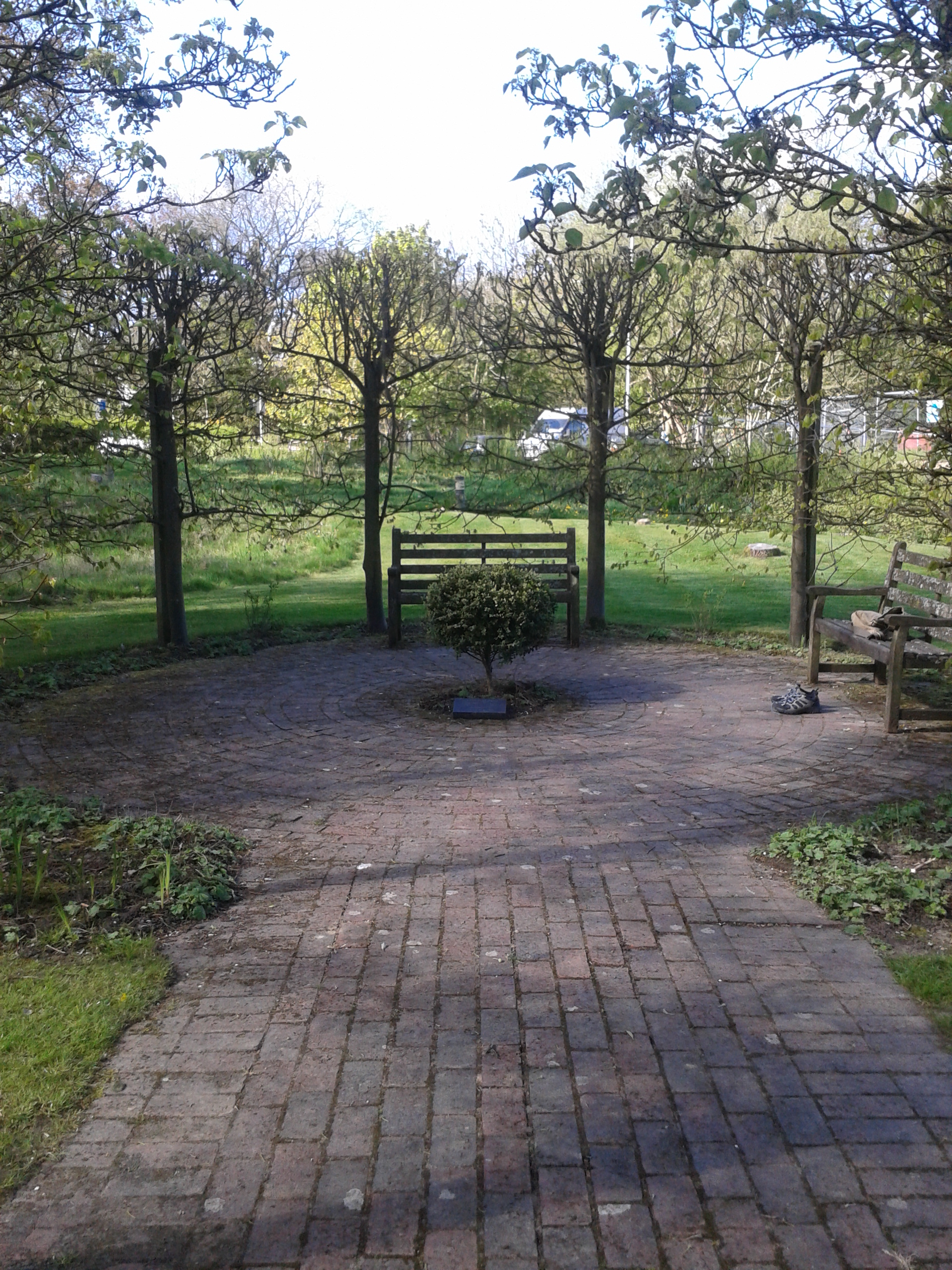
three minute breathing space by the sea – #mindfulness
Take three minutes out of clock time. Perhaps you are stuck indoors behind a desk. This is a three minute video of the sea, waves gently lapping at the beach.
Come to your senses. Let the waves and the sounds come to you. Notice your breathing, is it rhythmic like the waves? Is it fast and shallow or slow and deep like the waves?
Let the colours come to you. Notice when the clouds come over, or when the sun comes breaking through. Can you hear quieter sounds in the background.
If your mind wanders, notice what it wanders too and bring it back to the waves.
Feel the sand beneath your feet and the coolness of the water. Salt drying on your face and the cool wind and warm sun…
Notice any longings to walk on the beach barefoot, to paddle in the sea. To gaze out at the horizon in open awareness, breathing in freedom. Is there a sense of gratitude and thanksgiving for the gift of your senses…
Did you notice the light flooding in at the end? May it be a picture of wellbeing flooding into you.
Let go of whatever is troubling you. Come back to the task in hand refreshed. As the paddle boarder appears at the end, so it is time for you to journey on to your next task.
Mindfulness short: myth – in mindfulness meditation we are trying to empty our mind
One of the biggest myths about mindfulness is that in mindfulness meditation you are trying to empty your mind. Ruby Wax who is good at answering questions people are asking answers the question this way in her book Sane New World, ‘With mindfulness the rumour is wrong that the point is to empty your mind; you need your mind to analyse, memorize, create and most importantly exist. It can never be empty while you’re alive, even in a coma your mind is still chattering away.’[1]
Why can she say this so categorically? It is all to do with what we think the mind is and how we define it. Interpersonal neurobiologist Daniel J. Siegel points out there is a lack of awareness and understanding of the mind. He defines the mind to be ‘a process that regulates the flow of energy and information.’[2] The mind is always receiving information from a great many sources. This includes sources outside of our own self and body. So it isn’t possible to empty it.
Whilst not directly addressing the question of ‘am I trying to empty my mind in mindfulness meditation?’, Mark Williams looks at mindfulness and psychological processes. He says there are two modes in which the mind operates (sometimes called being and doing), but more technically ‘conceptual (language-based) processing versus sensory-perceptual processing.’[3] Again, that’s a lot of information coming into your mind from different sources.
He goes on to say ‘In every waking moment we are receiving sights, sounds, tastes, smells, touch: stimuli from the external and internal world, but these are generally ignored in favour of spending most of our attention in conceptual mode: thinking, planning, daydreaming, analysing, remembering, comparing, judging, analysing, and so forth.’[4]
Our minds are very busy! Now in a very important and technical phrase Williams then defines what attentional training (mindfulness meditations or mindful awareness practices) is doing, ‘Attentional training in mindfulness programs cultivate the ability to shift modes as an essential first step to being able to hold all experience (sensory and conceptual) in a wider awareness that is itself neither merely sensory nor conceptual.’[5]
This is a shift from doing to being, from the narrative self (conceptual mode) to the experiential self (sensory-perceptual mode), followed by an ability to hold both in an open wider awareness. Far from trying to empty our mind we are learning how ‘to pay open-hearted attention to objects in the exterior and interior world as they unfold, moment by moment. Attention is paid not only to the objects themselves but to our reactions to them…’[6]
Why this is important is another question. But staying with the rumour or myth that in mindfulness meditation I am trying to empty my mind, it can also be addressed by approaching it from the angle of feelings and emotion.
Rimma Teper in an important article does address this question directly, ‘A common misconception about mindfulness, and meditation in general, is that it involves emptying the mind of thoughts and emotions.’[7] Mindfulness benefits executive function and emotion regulation and she asks, ‘Does mindfulness foster better executive control and emotion regulation because it eliminates emotional responding? We think not. Instead, we suggest that these effects accrue because mindfulness promotes an openness and sensitivity to subtle changes in affective states, which are essential in signalling the need for control and energizing its execution.’[8] In mindfulness your mind doesn’t work against your embodied mindful brain, but with it!
Mark Williams makes a similar point, ‘Mindfulness is not about “not feeling” or becoming detached from affect.’[9] What mindfulness enables is to see ‘something as it is, without further elaboration: for example, seeing thoughts as mental events, or seeing physical sensations as physical sensations…’[10]
So are we trying to empty our minds in mindfulness meditation? No, we are not! It may be that in switching to awareness, our minds suddenly may feel more spacious, but we are not emptying our minds – we are looking clearly at what our minds are processing. Mindfulness is seeing clearly and feeling clearly. It is an embodied, relational awareness that faces reality, not avoiding it.
[1] Ruby Wax, Sane New World (London: Hodder & Stoughton, 2013), 136.
[2] Daniel J. Siegel, The Mindful Brain New York: W.W. Norton & Company, 2007), 5.
[3] J. Mark G. Williams, “Mindfulness and Psychological Process,” Emotion 10, no.1 (2010): 2, accessed April 4 2015, http://dx.doi.org/10.1037/a0018360.
[4] Williams,2.
[5] Williams, 2.
[6] Williams, 2.
[7] Rimmer Teper, Zindel V. Segal, and Michael Inzlicht, “ Inside the Mindul Mind: How Mindfulness Enhances Emotion Regulation Through Improvements in Executive Control,” Current Directions in Psychological Science XX, no. X (2013): 1, accessed April 5 2015, http://dx.doi.org/10.1177/0963721413495869.
[8] Teper, 1.
[9] Williams, 4.
[10] Williams, 4.
Mindful Church Cafe Costa/Stanmore After hours 6.30 p.m. Wednesday April 15 – #mindfulness at work
Mindfulness at Work
Mindful Church Café
What is ‘Mindfulness’?
- Mindfulness is our universal human capacity for awareness and attention, and interest in mindfulness is growing exponentially.
- It is being introduced into health, education, work and many other areas including parenting and relationships, although its roots are spiritual, with all the great faith traditions having some version of mindfulness.
- Mindfulness can be enhanced through meditative and other practices, both secular and spiritual.
Mindfulness at Work
Mindfulness at Work is a one-off Mindful Church Cafe at Costa/Stanmore After Hours from 6.30 p.m. to 8 p.m. Wednesday 15th April 2015.
Venue: Costa Coffee Stanmore (24-26 Church Road, Stanmore, HA7 4AW)
Time: 18:30 -20:00
It is being run by Shaun Lambert who is a trained counsellor and psychotherapist, as well as being Senior Minister of Stanmore Baptist Church. He is in great demand as a speaker, teacher and lecturer in the area of mindfulness. He also worked in the world of banking for 10 years, and has retained an interest in how work can become a healthy environment, and how we can relate to work healthily and mindfully.

Have you lost your Go sign?
If you want to find out more or sign up for the course, please contact Shaun via this website.
#mindfulness is the slow miracle of greening inside us that spills over into the world
I am often asked ‘what is mindfulness?’ Some people like scientific explanations (our universal capacity for awareness and attention), other people prefer more poetic ones.
Some ideas stay with you. One such idea for me is the greening power of God (viriditas), that Hildegard of Bingen (1098-1179) put forward in her works. Now when such an idea takes root you can see it in different ways, take it in directions that perhaps that the original author didn’t intend. It’s a phrase that describes mindfulness for me, in terms of what it can do.
What is greening for me? I believe it is something I have experienced in mindfulness. I see that mindfulness practices enable mindfulness as a trait to take root in us. In this way mindfulness is a slow miracle, where we begin to green inside, we experience a new freshness, a new release of creativity, a new wholeness, a new relationship with our senses, a new relationship with our own self, with others, with creation, with God.
I have experienced this through both mindfulness for health that you find in secular psychology, as well as the Christian distinctive of mindfulness of God. After all the Gospel is an embodied Gospel.
In this sense, mindfulness is the slow miracle of greening within us, where we begin to become what Irenaeus called ‘The Glory of God – a human being fully alive.’ When we practice both mindfulness for health and mindfulness of God I think we can become fully alive.
Paul Hammond of UCB’s interview with me – finding grace in the ordinary mindfully
This is Paul Hammond’s interview with me via UCB National Christian Radio – finding grace in the ordinary mindfully.
You can find out more about UCB via their website: http://www.ucb.co.uk/listen.html
Mindfulness of God and Personal Transformation retreat via @PenhurstRetreat
I am leading a retreat at Penhurst Retreat Centre on Mindfulness of God and Personal Transformation on 12-14 June 2015.
Here are the details below and a link to the retreat centre’s website:
The retreat will be exploring mindfulness of God and mindfulness of health, with the aim of personal transformation. Anyone interested in developing their awareness and attention would benefit from this retreat. There will be silence built into the retreat as this is an important part of the spiritual practice of mindfulness. You will be introduced to the historic spiritual practices of Lectio Divina and the Jesus Prayer, as well as secular mindful awareness practices. We will be looking at mindfulness within Mark’s Gospel, the monastic tradition and psychology. The retreat will be interactive and dialogic with experiential elements.
http://www.penhurst-retreat-centre.org.uk/programme.php?viewretreat=233

hearing the song
#Mindfulness article via Associaton of Christian Counsellors magazine Accord
Dear Shaun,
I have been suffering from recurrent depression and my doctor has recommended I try Mindfulness-Based Cognitive Therapy (MBCT). Someone in my church has said I shouldn’t touch it with a bargepole because mindfulness has Buddhist roots. Apparently it also involves meditation, and in meditation you are trying to empty your mind, aren’t you? Isn’t that dangerous?
I’m desperate for help – can you offer me any guidance?
Yours ever,
Concerned Christian
Dear Concerned Christian,
You are right! There is some confusion and caution within the church when it comes to mindfulness. It is important to bring some clarity into this area so you can make an informed decision.
Mindfulness is our universal human capacity for awareness and attention. This capacity needs to be distinguished from the mindful awareness or meditative practices that help us develop this innate ability to be mindful. A doctor in the USA called Jon Kabat-Zinn who pioneered the use of mindfulness within medicine in the 1970s, through what he called Mindfulness-Based Stress Reduction (MBSR), pointed out that saying mindfulness is Buddhist is like saying that gravity is British because Isaac Newton discovered it!
Human capacity
All the main faiths discovered the gravity of awareness and attention very early on and developed different forms of mindful or meditative practice. What is more recent is that the secular world, represented by cognitive psychology and neuroscience, among others, has become interested in mindfulness.
Because mindfulness is our universal human capacity for attention and awareness, Christians, Buddhists and secular psychologists can engage with mindfulness in different ways and with different intentions.
Reality focused
The main intention within secular psychology is to use mindfulness for health – in the treatment of depression, anxiety, stress, chronic pain and many other conditions. There is a lot of evidence-based research supporting its efficacy in these areas. Because the pioneering psychologists who developed MBSR and MBCT want their treatments to be widely accepted, they have worked very hard to separate mindfulness and its practices from its religious roots. Generally in secular psychology mindfulness is defined as ‘paying attention in a particular way: on purpose, in the present moment, and non-judgementally’.
Christians can use these secular psychologies with the intention of using mindfulness for health. The meditative or mindful awareness practices (MAPs), although originally taken from Buddhism, are neutral – anyone can use them. These practices are ‘reality-focused’ practices helping you to develop an awareness of your inner life of thoughts, feelings and bodily sensations. In fact new MAPs are being developed which are not dependent on Buddhist roots.
Internal capacities
When it comes to emptying our mind neuroscientists and cognitive psychologists tell us it is impossible. Our multiple brain is constantly sending messages to our mind. In meditation within mindfulness you are not trying to empty your mind, even if it were possible. What you are trying to do is something else entirely.
How our minds work in relation to our thoughts, feelings and bodily sensations is fascinating but we often operate without a clear map of what goes on inside us. A number of internal capacities are involved when we are practising mindfulness. If I say to you, ‘Tell me what you are thinking and feeling,’ you can tell me. The key question to ask is, ‘How can you do that?’
Your senses
Human beings are the only animal that can observe their own thoughts, feelings and bodily sensations. This capacity is a form of awareness, sometimes called ‘meta-awareness’. We are cultivating this capacity when we practise mindfulness.
What you are doing is moving out of the thinking part of your mind into your senses and your capacity for awareness.
Seventh sense
Alongside our capacity for meta-awareness, our five senses are streams of awareness within us, although we usually don’t think of them in that way – and we often take them for granted! Daniel Siegel, an interpersonal neurobiologist who works with mindfulness, says that we actually have eight senses. The sixth sense is our ability to become aware of what is going on in our body. We know when we are in pain, or feeling tired or elated. The seventh sense is our ability to become aware of our thoughts and feelings. The eighth sense is our ability to be aware of what other people are thinking and feeling.
When we are meditating in mindfulness we are switching from our normal analytical thinking – what has been called our ‘doing’ mental gear – to our awareness within, or ‘being’ mental gear. This switch is sometimes described as a move from our narrative self to our experiential self.
Central insight
Why is this important? Knowing this helps us understand the central insight of mindfulness, whether from a Christian, Buddhist or secular psychological perspective. According to Christian contemplative writer Martin Laird, the key question to ask when we stand at the doorway of the present moment, which is at the heart of being mindful, is, ‘Are you your thoughts and feelings?’
This is a very important question. Many people think they are their thoughts and feelings. They are fused to their thoughts and feelings, totally identified with them. Psychologists call this ‘cognitive fusion’. In other words, they look at life from their thoughts and feelings. If these thoughts and feelings are anxious and depressed, that is what you become.
Cognitive diffusion
The mindful awareness practices help us to realise that we are not our thoughts and feelings, that they are passing events in our minds. In this realisation we are able to notice our thoughts and feelings and let them go. We don’t avoid them experientially and suppress them; we face them, accept them and let them go. We have switched from looking at life from our thoughts and feelings to looking at our thoughts and feelings. We can express this shift by saying, ‘I am having a depressed thought,’ rather than, ‘I am depressed.’ This is learning cognitive defusion.
There is a lot more that can be said about mindfulness, but if we understand the central insight that we are not our thoughts and feelings and that we can learn to defuse from afflictive thoughts and feelings, like depression and anxiety, then we can find the motivation to practise mindfulness.
Deciding our intention
It is important to decide our intention. I use secular mindfulness to step out of anxiety, as mindfulness for health. You can use secular mindfulness as a Christian to begin the journey out of depression. The meditative or mindful awareness practices actually change the structure and activity of the brain for the better, because of the neuroplasticity of our brains. It works!
I am also looking at the biblical and historical roots of Christian mindfulness. A Christian distinctive would be mindfulness of God, just as God is mindful of us (Psalm 8). There are Christian mindful awareness or meditative practices that have come out the history of the church through its contemplative strand.
Inside out
The final key thing is to know that mindfulness can only be understood from the inside out. We are so stuck in the ‘doing’ mental gear that it is only practising mindfulness that enables us to see that we have a ‘being’ mental gear, an experiential self, streams of awareness within us that enable us to move from a bad place to a good place, from dry aridity to a place of bubbling creativity.
I hope this gives you enough to make an informed decision about whether to use mindfulness for health.
Yours ever,
Shaun
This piece is in the latest Accord magazine published by the Association of Christian Counsellors http://www.acc-uk.org/index.asp and Shaun will be speaking at their 2015 Conference
http://www.acc-uk.org/acc-conference-jan-2015/
As well as being a trained counsellor and psychotherapist, Shaun Lambert is Senior Minister of Stanmore Baptist Church. He is currently researching a PhD in mindfulness from biblical, historical and psychological perspectives. Shaun is the author of A Book of Sparks – A study in Christian MindFullness, and His latest book is a children’s fantasy novel entitled Flat Earth Unroofed: a tale of mind lore, which has mindfulness woven into it.
 shaunlambert.co.uk