
Mindfulness of God & personal transformation retreat El Palmeral Spain 27 June to 1 July 2016
 Leading a retreat on mindfulness of God and personal transformation at El Palmeral, Alicante Spain 27 June to 1 July 2016
My talk at HTB Focus in July, introducing #mindfulness for Christians
This is a link to my talk at HTB Focus, Introducing Mindfulness for Christians
my talk at HTB Focus in July introducing mindfulness for Christians
Mindfully calming the restless bees of our mind
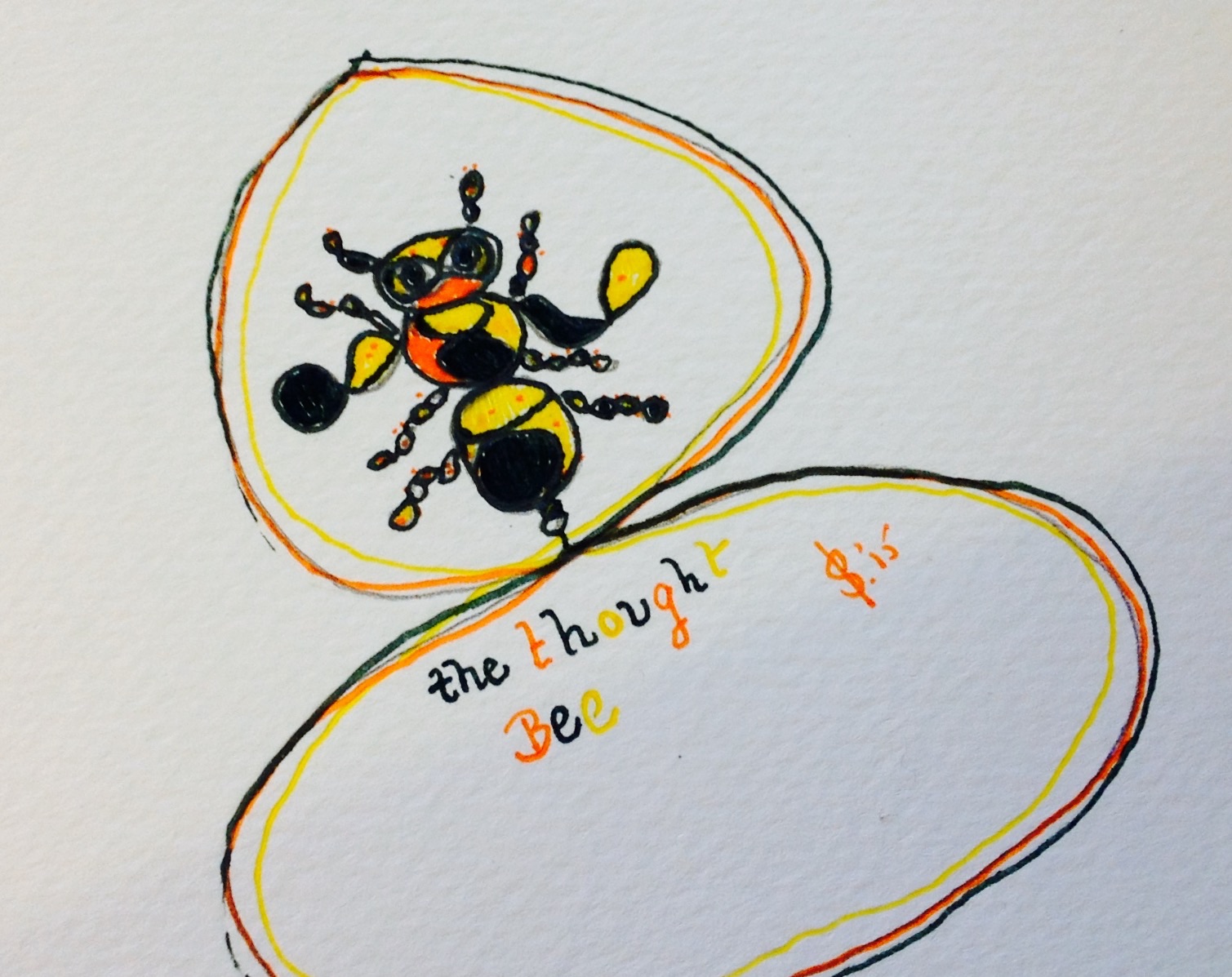 Peter Tyler quotes a phrase from Teresa of Avila describing distracting thoughts as ‘restless bees’ that ‘gad about’ ( Peter Tyler, Teresa of Avila: Doctor of the Soul (London: Bloomsbury, 2013), 86).
Thoughts are like restless bees, and like bees they can be calmed. With bees it is the fearless presence of the beekeeper, and the use of calming smoke.
With thoughts it is the fearless calming presence of awareness which holds all thoughts and feelings. Thoughts like bees can sting and swarm, especially when our fear mind is activated. We find the place of calming awareness which is not held by fear through mindful awareness or meditative practices.
Instead of becoming a victim of our thought bees, we become a witness to them. Experiencing them intimately but not becoming them, not becoming the swarm, not stirring them up to sting. In that place of awareness they cease being restless, instead they find their purpose – in making the honey of creativity, compassion, love, right action and seeing clearly.
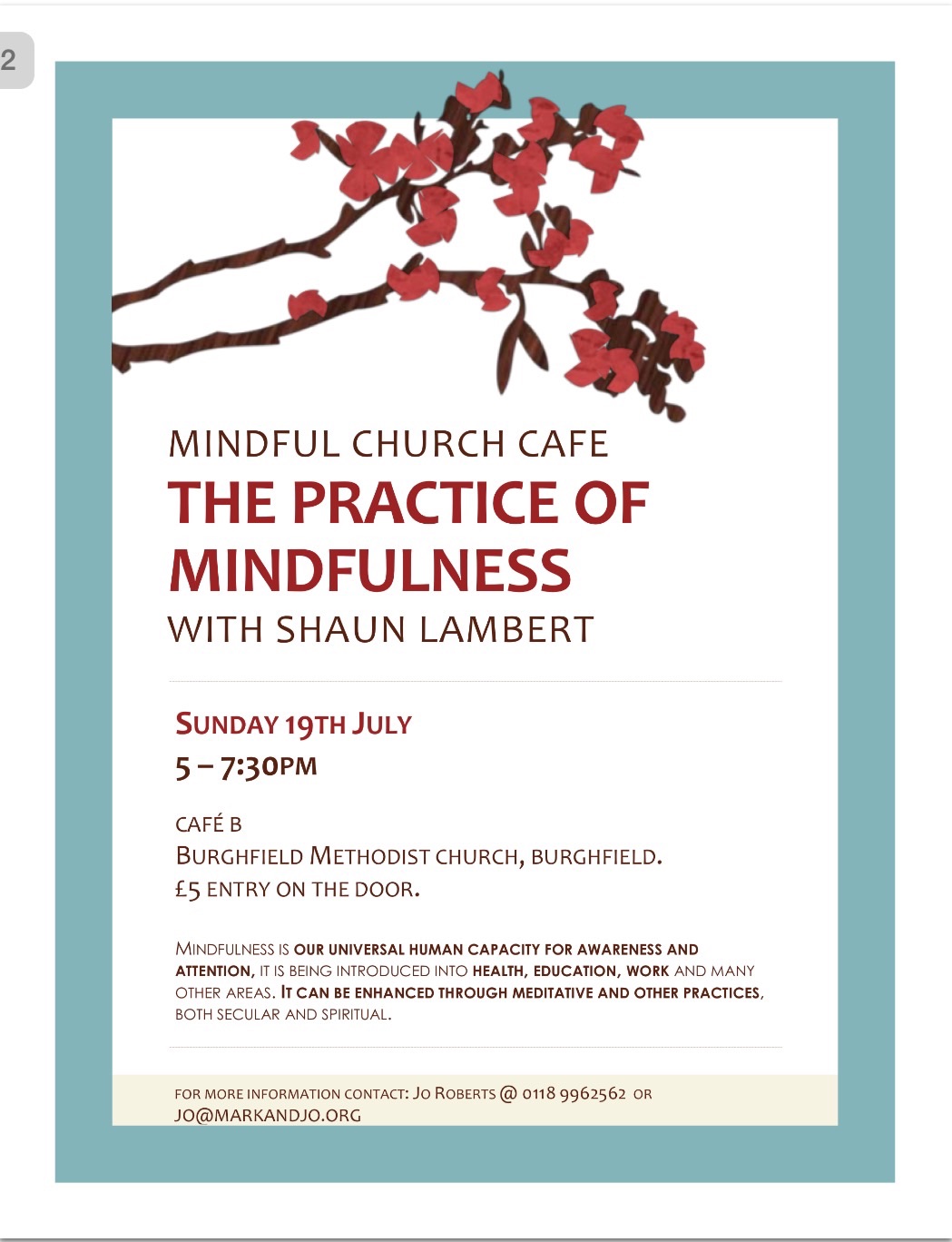
First of new series of Mindful Church Cafe tonight Costa Stanmore 6:30 p.m. On wisdom
 25 people at first cafe of new series tonight!
one minute meditation of fish in pond #mindfulness
I am at Hayes Conference Centre for the @RetreatsUK retreat. The centre has a beautiful pond where you can watch little fish swimming, being still, moving, suddenly startled…
I’ve recorded one minute of this on video. If you are stuck indoors somewhere it is good for your soul just to be able to step back into nature and your senses even for a minute. Watch the fish and notice their movements and their stillness, hear the sound of the birds and perhaps the indistinct sound of people’s voices occasionally in the background. Notice how the light changes and there are ripples on the water from the breeze. Sometimes we see the fish more clearly, sometimes they are more fuzzy and out of awareness.
If you think of the pond as your mind, a pool of awareness, and the fish as thoughts, feelings, bodily sensations that come into your mind. The fish mirror some of the ways your thoughts have patterns and ways of reacting. Notice how the fish are suddenly startled. That happens in our minds many times a day, but unlike the fish we find it harder to be still again. The stress response sends in fear, anxiety, anger in bigger shoals, more often, creating stress ripples that can stay with us.
Sometimes we see the fish thoughts clearly, sometimes they are out of awareness, sometimes we are the fish caught up by the thoughts, held by the experience and dragged down into a negative automatic reacton.
We live in a society and culture that is triggering that stress response many times a day.
In mindfulness and contemplation instead of being held by the experience we can learn to hold the experience, notice it, intimately feel it, and then let it go – coming back to whatever it is we want to focus our attention on. In this way we learn to calm the mind in an ongoing dynamic pattern.
Consider the lilies…
The dangerous spark of inquisitiveness – a #mindfulness trait and curious cows
I was leading a retreat at the very rural, English, and beautiful Penhurst Retreat Centre in East Sussex. In the afternoon space I went for a walk and stopped to look at some cows close to the woodland edge I was walking through.
It seems they were curious (see the video below) and came to look at me! Being curious, open to exploring and approaching new things is an important part of being mindful. Interestingly some educators believe a dangerous spark of inquisitiveness should be cultivated in children’s lives.
Here is a short extract from ‘A Book of Sparks – a study in Christian MindFullness’ where I interview Professor Guy Claxton about this.
‘One of those I have learnt much from in conversation is Professor Guy Claxton, who, as we discussed earlier, is out of the line of educational prophets who ask why we count qualifications but not the cost of acquiring them. He wishes to restore the spark of dangerous inquisitiveness into the person of the child as well as the practice of education. He believes this dangerous inquisitiveness should exist not only in education but also in what he calls ‘proximal spirituality’.
For the professor, education is not just about skills and technical proficiency but also about the cultivation of qualities like inquisitiveness.’ (p.118)
If you are working in a concrete jungle, take a minute out of clock time and just enjoy these cows being inquisitive. Perhaps resolve mindfully to be curious, open and inquisitive to new things for the rest of the day.
One minute breathing space, let the flower bring you to your senses…#mindfulness
Take one minute out of clock time. Focus your attention on the poppy. Let it bring you to your senses. Let the colour fill your vision in open awareness. See the movement of the petals in the wind. Let the sounds come to you and the silence of the flower.
See the concrete encroaching, is that like your life? Feel the red blood singing in your veins, and the scarlet bleed of pain. Notice the first thought and if your mind wanders into a negative ruminating story, bring it back to the flower.
Is your breath, slowing, deepening in the moment? Did you hear the birds?
Even one minute out of clock time can re-orientate you, allow you to accept things as they are at the moment…let them go.
Come back to the task in hand. Perhaps with a goal for later. To go for a noticing walk…listen to some music…sing along…
#mindfulness- instead of being held by the experience you are holding the experience #MHAW15
Jon Kabat-Zinn the American Doctor who pioneered the use of mindfulness in Western medicine talks about an ‘orthogonal rotation in consciousness’ when we practice mindfulness. There is a shift in perspective.
It can be described in different ways. I see it as a shift from thinking to awareness, from being a victim of our thoughts and feelings, to an intimate witness of them. Others have talked about no longer being on a train of thought, but looking at the train of thought from a hillside.
Now in a very important and technical phrase Mark Williams defines what attentional training (mindfulness meditations or mindful awareness practices) is doing, ‘Attentional training in mindfulness programs cultivate the ability to shift modes as an essential first step to being able to hold all experience (sensory and conceptual) in a wider awareness that is itself neither merely sensory nor conceptual.’
This is a shift from doing to being, from the narrative self (conceptual mode) to the experiential self (sensory-perceptual mode), followed by an ability to hold both in an open wider awareness. Instead of being held by the experience you are holding the experience.
In this attached video I have a little visual illustration of this rotation. It is a video of two hour-glasses, egg-timers, whatever you want to call them. In the traditional one on the left the sand rushes down through the narrow gap until it is all gone.
That is a picture of our self following our thoughts, which is what we normally do, down into a, narrow, negative, automatic reactive place – where we are a victim of our thoughts.
The one on the right shows the red particles rising upwards, it is a clever alternative. It can also be seen as an image of what happens when we have this rotation in consciousness. When we shift to awareness, it is as if the thoughts rise into that awareness enabling us to observe them, and in that intimate observation we can chose a skilled response. We are no longer in our self, rushing down with our thoughts into that negative, automatic place of reaction. We are holding the experience rather than being held by the experience.
I’d be interested to hear if you find the visual illustration of this shift in perspective helpful?
Is the remains of your prayer life, lying there like a discarded nest?

like a discarded nest
Sometimes I talk to people and they describe the remains of a prayer life, like a discarded nest.
Spring is a good time though to start the process of rebuilding a prayer life again. We can take our lessons from the nest-builders.
The most difficult thing in prayer and mindfulness is a daily practice. It is also the most important thing. You have to gather the stuff of a nest, and the stuff of prayer consistently and regularly.
Just as with the birds the stuff we need is all around. In our prayer times God interweaves his Word with all that we bring into a place that we can begin to find, home in on, like a nest. It becomes a home.
Just as the birds find the stuff they need from the environment around, so can we. Time spent in nature, letting the grass whisper of the Creator, as embodied contemplation, adds to the nest. The flight of silence and solitude where we attentively look and listen for the footprints of the Invisible God who is already there with us. The encouragement of others we see flying in the sky, also looking to build a nest of prayer.
The building of a nest and the life of prayer require stability, the returning to one place, from which we can fly. In that place, just like the birds, we can nurture new life, that will grow wings of its own. Like the birds we also need to migrate, to find a place to retreat to. For me over the last 10 years that has been Worth Abbey.
Perhaps each year, like the birds, we need to re-examine the nest, and start the process of building a new one. Automaticity in prayer and life can be the thing that leads us to discard the nest prematurely, and not try to build again.
Building again asks us to hope again, to not give up, to become resilient in our prayer life. In our prayer life our ordinary, embodied and relational life is transformed, as we meditatively consider His Word, the work of His hands…
 shaunlambert.co.uk