
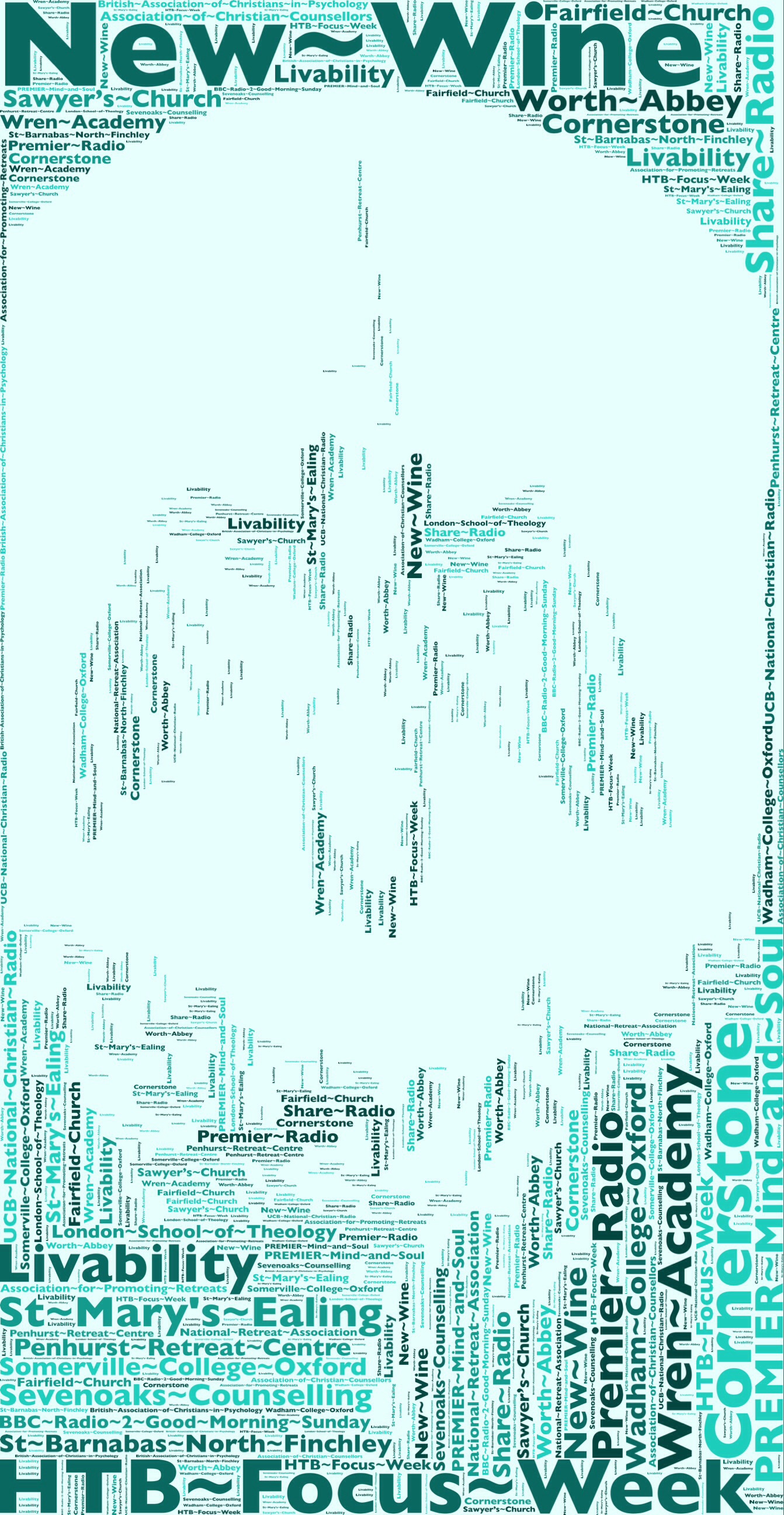
Praying for some great organisations and events today
praying for these great events and organisations where I have spoken, am going to speak, have led a seminar, lectured, led a retreat over the last three years. May they know God’s blessing.
The dangerous spark of inquisitiveness – a #mindfulness trait and curious cows
I was leading a retreat at the very rural, English, and beautiful Penhurst Retreat Centre in East Sussex. In the afternoon space I went for a walk and stopped to look at some cows close to the woodland edge I was walking through.
It seems they were curious (see the video below) and came to look at me! Being curious, open to exploring and approaching new things is an important part of being mindful. Interestingly some educators believe a dangerous spark of inquisitiveness should be cultivated in children’s lives.
Here is a short extract from ‘A Book of Sparks – a study in Christian MindFullness’ where I interview Professor Guy Claxton about this.
‘One of those I have learnt much from in conversation is Professor Guy Claxton, who, as we discussed earlier, is out of the line of educational prophets who ask why we count qualifications but not the cost of acquiring them. He wishes to restore the spark of dangerous inquisitiveness into the person of the child as well as the practice of education. He believes this dangerous inquisitiveness should exist not only in education but also in what he calls ‘proximal spirituality’.
For the professor, education is not just about skills and technical proficiency but also about the cultivation of qualities like inquisitiveness.’ (p.118)
If you are working in a concrete jungle, take a minute out of clock time and just enjoy these cows being inquisitive. Perhaps resolve mindfully to be curious, open and inquisitive to new things for the rest of the day.
One minute breathing space, let the flower bring you to your senses…#mindfulness
Take one minute out of clock time. Focus your attention on the poppy. Let it bring you to your senses. Let the colour fill your vision in open awareness. See the movement of the petals in the wind. Let the sounds come to you and the silence of the flower.
See the concrete encroaching, is that like your life? Feel the red blood singing in your veins, and the scarlet bleed of pain. Notice the first thought and if your mind wanders into a negative ruminating story, bring it back to the flower.
Is your breath, slowing, deepening in the moment? Did you hear the birds?
Even one minute out of clock time can re-orientate you, allow you to accept things as they are at the moment…let them go.
Come back to the task in hand. Perhaps with a goal for later. To go for a noticing walk…listen to some music…sing along…
three minute breathing space by the sea – #mindfulness
Take three minutes out of clock time. Perhaps you are stuck indoors behind a desk. This is a three minute video of the sea, waves gently lapping at the beach.
Come to your senses. Let the waves and the sounds come to you. Notice your breathing, is it rhythmic like the waves? Is it fast and shallow or slow and deep like the waves?
Let the colours come to you. Notice when the clouds come over, or when the sun comes breaking through. Can you hear quieter sounds in the background.
If your mind wanders, notice what it wanders too and bring it back to the waves.
Feel the sand beneath your feet and the coolness of the water. Salt drying on your face and the cool wind and warm sun…
Notice any longings to walk on the beach barefoot, to paddle in the sea. To gaze out at the horizon in open awareness, breathing in freedom. Is there a sense of gratitude and thanksgiving for the gift of your senses…
Did you notice the light flooding in at the end? May it be a picture of wellbeing flooding into you.
Let go of whatever is troubling you. Come back to the task in hand refreshed. As the paddle boarder appears at the end, so it is time for you to journey on to your next task.
leading #mindfulness retreat via The Association for Promoting Retreats 29-31 Oct 2015
Below is a link to the mindfulness retreat I am leading for the Association for Promoting Retreats 29-31 October at Old Alresford Place
#mindfulness workshops at Nat. Retreat Associaton retreat 22-25 June 2015
Retreat Association, 22-25 June 2015
Guest speakers and contributors include Dr Rowan Williams, Fr Christopher Jamison OSB, Revd Graham Sparkes and Margaret Rizza. I will be leading two workshops on mindfulness.
http://www.retreats.org.uk/conference2015.html
#mindfulness- instead of being held by the experience you are holding the experience #MHAW15
Jon Kabat-Zinn the American Doctor who pioneered the use of mindfulness in Western medicine talks about an ‘orthogonal rotation in consciousness’ when we practice mindfulness. There is a shift in perspective.
It can be described in different ways. I see it as a shift from thinking to awareness, from being a victim of our thoughts and feelings, to an intimate witness of them. Others have talked about no longer being on a train of thought, but looking at the train of thought from a hillside.
Now in a very important and technical phrase Mark Williams defines what attentional training (mindfulness meditations or mindful awareness practices) is doing, ‘Attentional training in mindfulness programs cultivate the ability to shift modes as an essential first step to being able to hold all experience (sensory and conceptual) in a wider awareness that is itself neither merely sensory nor conceptual.’
This is a shift from doing to being, from the narrative self (conceptual mode) to the experiential self (sensory-perceptual mode), followed by an ability to hold both in an open wider awareness. Instead of being held by the experience you are holding the experience.
In this attached video I have a little visual illustration of this rotation. It is a video of two hour-glasses, egg-timers, whatever you want to call them. In the traditional one on the left the sand rushes down through the narrow gap until it is all gone.
That is a picture of our self following our thoughts, which is what we normally do, down into a, narrow, negative, automatic reactive place – where we are a victim of our thoughts.
The one on the right shows the red particles rising upwards, it is a clever alternative. It can also be seen as an image of what happens when we have this rotation in consciousness. When we shift to awareness, it is as if the thoughts rise into that awareness enabling us to observe them, and in that intimate observation we can chose a skilled response. We are no longer in our self, rushing down with our thoughts into that negative, automatic place of reaction. We are holding the experience rather than being held by the experience.
I’d be interested to hear if you find the visual illustration of this shift in perspective helpful?
Is the remains of your prayer life, lying there like a discarded nest?

like a discarded nest
Sometimes I talk to people and they describe the remains of a prayer life, like a discarded nest.
Spring is a good time though to start the process of rebuilding a prayer life again. We can take our lessons from the nest-builders.
The most difficult thing in prayer and mindfulness is a daily practice. It is also the most important thing. You have to gather the stuff of a nest, and the stuff of prayer consistently and regularly.
Just as with the birds the stuff we need is all around. In our prayer times God interweaves his Word with all that we bring into a place that we can begin to find, home in on, like a nest. It becomes a home.
Just as the birds find the stuff they need from the environment around, so can we. Time spent in nature, letting the grass whisper of the Creator, as embodied contemplation, adds to the nest. The flight of silence and solitude where we attentively look and listen for the footprints of the Invisible God who is already there with us. The encouragement of others we see flying in the sky, also looking to build a nest of prayer.
The building of a nest and the life of prayer require stability, the returning to one place, from which we can fly. In that place, just like the birds, we can nurture new life, that will grow wings of its own. Like the birds we also need to migrate, to find a place to retreat to. For me over the last 10 years that has been Worth Abbey.
Perhaps each year, like the birds, we need to re-examine the nest, and start the process of building a new one. Automaticity in prayer and life can be the thing that leads us to discard the nest prematurely, and not try to build again.
Building again asks us to hope again, to not give up, to become resilient in our prayer life. In our prayer life our ordinary, embodied and relational life is transformed, as we meditatively consider His Word, the work of His hands…
Mindfulness short: myth – in mindfulness meditation we are trying to empty our mind
One of the biggest myths about mindfulness is that in mindfulness meditation you are trying to empty your mind. Ruby Wax who is good at answering questions people are asking answers the question this way in her book Sane New World, ‘With mindfulness the rumour is wrong that the point is to empty your mind; you need your mind to analyse, memorize, create and most importantly exist. It can never be empty while you’re alive, even in a coma your mind is still chattering away.’[1]
Why can she say this so categorically? It is all to do with what we think the mind is and how we define it. Interpersonal neurobiologist Daniel J. Siegel points out there is a lack of awareness and understanding of the mind. He defines the mind to be ‘a process that regulates the flow of energy and information.’[2] The mind is always receiving information from a great many sources. This includes sources outside of our own self and body. So it isn’t possible to empty it.
Whilst not directly addressing the question of ‘am I trying to empty my mind in mindfulness meditation?’, Mark Williams looks at mindfulness and psychological processes. He says there are two modes in which the mind operates (sometimes called being and doing), but more technically ‘conceptual (language-based) processing versus sensory-perceptual processing.’[3] Again, that’s a lot of information coming into your mind from different sources.
He goes on to say ‘In every waking moment we are receiving sights, sounds, tastes, smells, touch: stimuli from the external and internal world, but these are generally ignored in favour of spending most of our attention in conceptual mode: thinking, planning, daydreaming, analysing, remembering, comparing, judging, analysing, and so forth.’[4]
Our minds are very busy! Now in a very important and technical phrase Williams then defines what attentional training (mindfulness meditations or mindful awareness practices) is doing, ‘Attentional training in mindfulness programs cultivate the ability to shift modes as an essential first step to being able to hold all experience (sensory and conceptual) in a wider awareness that is itself neither merely sensory nor conceptual.’[5]
This is a shift from doing to being, from the narrative self (conceptual mode) to the experiential self (sensory-perceptual mode), followed by an ability to hold both in an open wider awareness. Far from trying to empty our mind we are learning how ‘to pay open-hearted attention to objects in the exterior and interior world as they unfold, moment by moment. Attention is paid not only to the objects themselves but to our reactions to them…’[6]
Why this is important is another question. But staying with the rumour or myth that in mindfulness meditation I am trying to empty my mind, it can also be addressed by approaching it from the angle of feelings and emotion.
Rimma Teper in an important article does address this question directly, ‘A common misconception about mindfulness, and meditation in general, is that it involves emptying the mind of thoughts and emotions.’[7] Mindfulness benefits executive function and emotion regulation and she asks, ‘Does mindfulness foster better executive control and emotion regulation because it eliminates emotional responding? We think not. Instead, we suggest that these effects accrue because mindfulness promotes an openness and sensitivity to subtle changes in affective states, which are essential in signalling the need for control and energizing its execution.’[8] In mindfulness your mind doesn’t work against your embodied mindful brain, but with it!
Mark Williams makes a similar point, ‘Mindfulness is not about “not feeling” or becoming detached from affect.’[9] What mindfulness enables is to see ‘something as it is, without further elaboration: for example, seeing thoughts as mental events, or seeing physical sensations as physical sensations…’[10]
So are we trying to empty our minds in mindfulness meditation? No, we are not! It may be that in switching to awareness, our minds suddenly may feel more spacious, but we are not emptying our minds – we are looking clearly at what our minds are processing. Mindfulness is seeing clearly and feeling clearly. It is an embodied, relational awareness that faces reality, not avoiding it.
[1] Ruby Wax, Sane New World (London: Hodder & Stoughton, 2013), 136.
[2] Daniel J. Siegel, The Mindful Brain New York: W.W. Norton & Company, 2007), 5.
[3] J. Mark G. Williams, “Mindfulness and Psychological Process,” Emotion 10, no.1 (2010): 2, accessed April 4 2015, http://dx.doi.org/10.1037/a0018360.
[4] Williams,2.
[5] Williams, 2.
[6] Williams, 2.
[7] Rimmer Teper, Zindel V. Segal, and Michael Inzlicht, “ Inside the Mindul Mind: How Mindfulness Enhances Emotion Regulation Through Improvements in Executive Control,” Current Directions in Psychological Science XX, no. X (2013): 1, accessed April 5 2015, http://dx.doi.org/10.1177/0963721413495869.
[8] Teper, 1.
[9] Williams, 4.
[10] Williams, 4.
Mindful Church Cafe Costa/Stanmore After hours 6.30 p.m. Wednesday April 15 – #mindfulness at work
Mindfulness at Work
Mindful Church Café
What is ‘Mindfulness’?
- Mindfulness is our universal human capacity for awareness and attention, and interest in mindfulness is growing exponentially.
- It is being introduced into health, education, work and many other areas including parenting and relationships, although its roots are spiritual, with all the great faith traditions having some version of mindfulness.
- Mindfulness can be enhanced through meditative and other practices, both secular and spiritual.
Mindfulness at Work
Mindfulness at Work is a one-off Mindful Church Cafe at Costa/Stanmore After Hours from 6.30 p.m. to 8 p.m. Wednesday 15th April 2015.
Venue: Costa Coffee Stanmore (24-26 Church Road, Stanmore, HA7 4AW)
Time: 18:30 -20:00
It is being run by Shaun Lambert who is a trained counsellor and psychotherapist, as well as being Senior Minister of Stanmore Baptist Church. He is in great demand as a speaker, teacher and lecturer in the area of mindfulness. He also worked in the world of banking for 10 years, and has retained an interest in how work can become a healthy environment, and how we can relate to work healthily and mindfully.
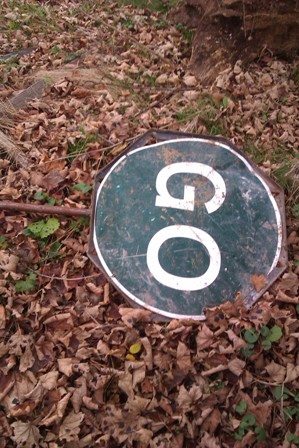
Have you lost your Go sign?
If you want to find out more or sign up for the course, please contact Shaun via this website.
 shaunlambert.co.uk