
mindful paths to peace article via @RetreatsUK
This is my article in Retreats 2016 which can be ordered from @RetreatsUK:
http://www.retreats.org.uk/retreatsjournal.html.
If you want to know more about retreats next year it is the best one stop guide!


Mindfulness of God & personal transformation retreat El Palmeral Spain 27 June to 1 July 2016
 Leading a retreat on mindfulness of God and personal transformation at El Palmeral, Alicante Spain 27 June to 1 July 2016
Short video interview with me via @RetreatsAPR on #mindfulness
short video interview with me via Association for Promoting Retreats on mindfulness
http://www.christiantoday.com/article/mindfulness.how.it.works.and.why.christians.should.practise.it/69083.htm
Christian Today asked Rev Shaun Lambert, who has trained extensively in counselling and psychotherapy, to explain.
Is #mindfulness God-given?
A link to my recent article in the Baptist Times, Is Mindfulness God-given? In the light of the free online summit on mindfulness now running it is an important question.
http://www.baptist.org.uk/Articles/449731/Is_Mindfulness_God.aspx
My talk at HTB Focus in July, introducing #mindfulness for Christians
This is a link to my talk at HTB Focus, Introducing Mindfulness for Christians
my talk at HTB Focus in July introducing mindfulness for Christians
Mindfully calming the restless bees of our mind
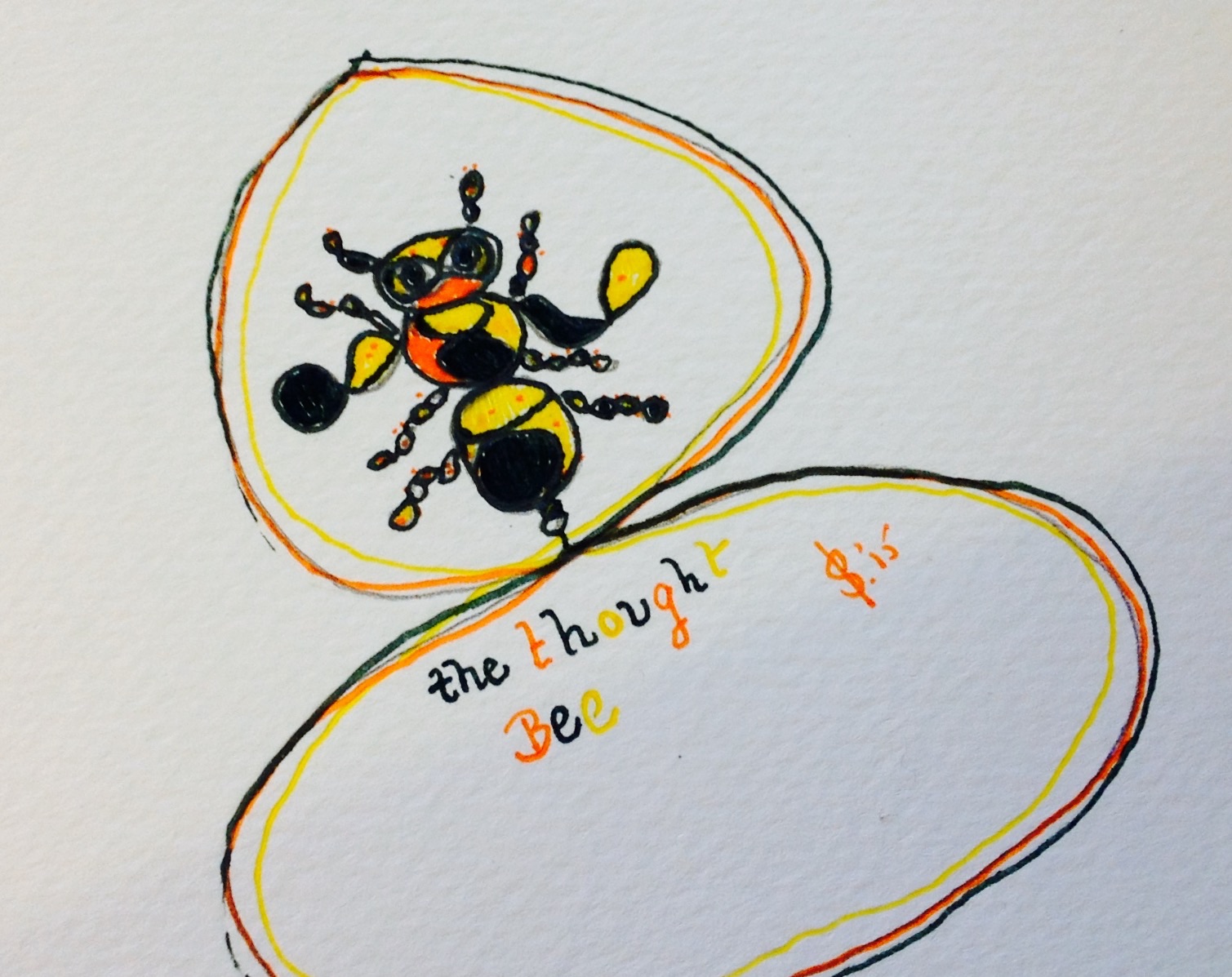 Peter Tyler quotes a phrase from Teresa of Avila describing distracting thoughts as ‘restless bees’ that ‘gad about’ ( Peter Tyler, Teresa of Avila: Doctor of the Soul (London: Bloomsbury, 2013), 86).
Thoughts are like restless bees, and like bees they can be calmed. With bees it is the fearless presence of the beekeeper, and the use of calming smoke.
With thoughts it is the fearless calming presence of awareness which holds all thoughts and feelings. Thoughts like bees can sting and swarm, especially when our fear mind is activated. We find the place of calming awareness which is not held by fear through mindful awareness or meditative practices.
Instead of becoming a victim of our thought bees, we become a witness to them. Experiencing them intimately but not becoming them, not becoming the swarm, not stirring them up to sting. In that place of awareness they cease being restless, instead they find their purpose – in making the honey of creativity, compassion, love, right action and seeing clearly.
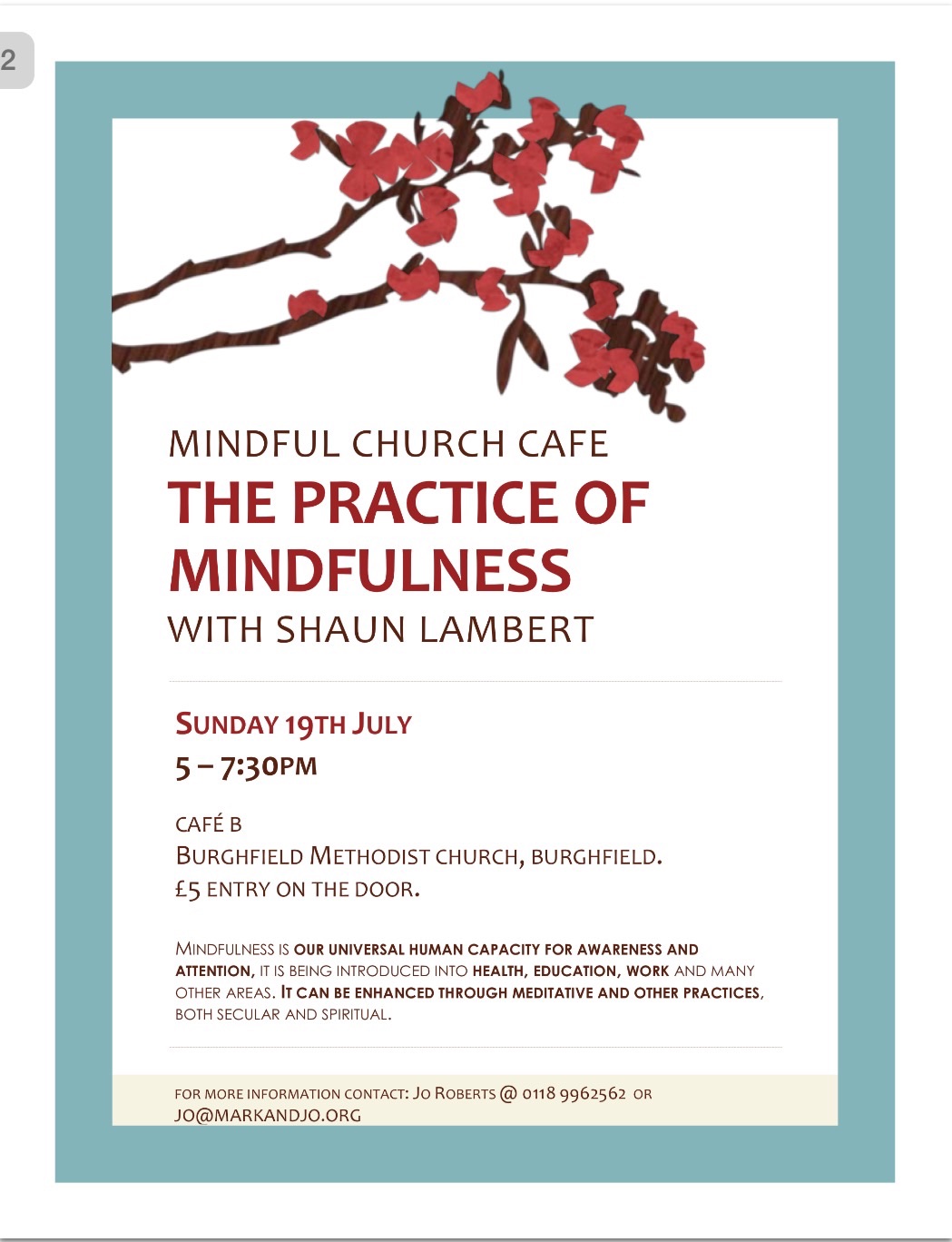
First of new series of Mindful Church Cafe tonight Costa Stanmore 6:30 p.m. On wisdom
 25 people at first cafe of new series tonight!
one minute meditation of fish in pond #mindfulness
I am at Hayes Conference Centre for the @RetreatsUK retreat. The centre has a beautiful pond where you can watch little fish swimming, being still, moving, suddenly startled…
I’ve recorded one minute of this on video. If you are stuck indoors somewhere it is good for your soul just to be able to step back into nature and your senses even for a minute. Watch the fish and notice their movements and their stillness, hear the sound of the birds and perhaps the indistinct sound of people’s voices occasionally in the background. Notice how the light changes and there are ripples on the water from the breeze. Sometimes we see the fish more clearly, sometimes they are more fuzzy and out of awareness.
If you think of the pond as your mind, a pool of awareness, and the fish as thoughts, feelings, bodily sensations that come into your mind. The fish mirror some of the ways your thoughts have patterns and ways of reacting. Notice how the fish are suddenly startled. That happens in our minds many times a day, but unlike the fish we find it harder to be still again. The stress response sends in fear, anxiety, anger in bigger shoals, more often, creating stress ripples that can stay with us.
Sometimes we see the fish thoughts clearly, sometimes they are out of awareness, sometimes we are the fish caught up by the thoughts, held by the experience and dragged down into a negative automatic reacton.
We live in a society and culture that is triggering that stress response many times a day.
In mindfulness and contemplation instead of being held by the experience we can learn to hold the experience, notice it, intimately feel it, and then let it go – coming back to whatever it is we want to focus our attention on. In this way we learn to calm the mind in an ongoing dynamic pattern.
Consider the lilies…
 shaunlambert.co.uk