
One-Minute Icon – Windows of tolerance #mindfulness #compassion

how big are your windows of tolerance?
Take a look at this window which I have made as small as possible. Daniel Siegel in his book ‘The Mindful Therapist’ talks about ‘a window of tolerance’. We have limits to the things we can tolerate.
I was challenged recently talking to someone whose wife had died. How much of his pain could I tolerate? I was challenged recently by somebody’s book about their experience of depression, which was beyond anything I could imagine. My windows of tolerance were challenged and stretched.
Sometimes it is our own pain that we cannot tolerate.
What comes to mind for you as you look at this window? What comes into your awareness? Who can come and inhabit the tree of your life and who do you exclude? What bird-thoughts and bird-feelings can come to your tree for shelter? Step out of clock-time for one minute and allow whatever is deep within to come into your awareness.
‘In that day each of you will invite his neighbour to sit under his vine and fig-tree,’ declares the Lord Almighty (Zechariah 3:1o)
Can we listen to this ancient, open window to our neighbour?
redeeming the ordinary #poetry #mindfulwriter

road sign that inspired a Haiku
Though autumn wind blows/spring lake in me is greening/fear not winter snows
This is a Haiku inspired by a road sign.
Frank Cottrell Boyce is a children’s writer who said this in an article in The Daily Telegraph recently, ‘I believe my job is not to dazzle with new wonders, but to scrub off the patina of familiarity so that my readers can see again how dazzling things already are.’
He is a mindful writer.
The ordinary is dazzling. An ordinary road sign can be seen in a new light. Why don’t you look out for road signs that catch your eye and write a Haiku or some other reflection on it? Our eyes are smeared with the lard of familiarity. Seeing with new eyes requires us to access the streams of awareness in us, moving out of ruminative and automatic thinking. We often dismiss people in the way we dismiss road signs. Mindfulness is seeing the extraordinary in the ordinary.
Let’s make some noise about stress #stress
Let’s make some noise about stress #stress
Click on link above to article on Stress I’ve written which is on Christian Today website.
How God changes your brain for the better #brain scans
How God changes your brain for the better #brain scans (click this link)
A link to an interview of mine with Andrew Newberg, a neuroscientist in the USA who is the author of a number of books including ‘How God Changes Your Brain’
One Minute Icon 4 – am I unreconciled? #contemplation
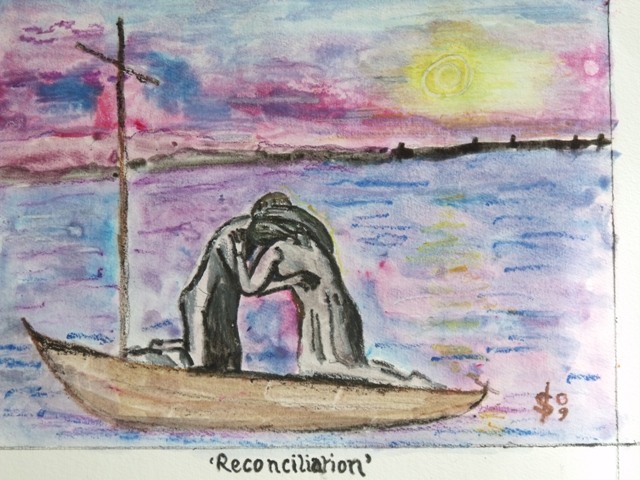
reconciliation by shaun lambert
Step out of clock time for one minute. Focus on the painting. If your mind wanders, note where it wanders and come back to the painting. Where is your mind wandering? If the painting brings you into a new place of open awareness, what is it that comes to mind? Carrying unreconciled things is a heavy burden. (The embrace was inspired by a sculpture at Coventry Cathedral, a duplicate of which is in the Peace Garden in Hiroshima, Japan). (see also an earlier post in April, The Mystical Boat)
The dissolution of the moralities #moral memory
The dissolution of the moralities #moral memory
Click on the link above to go to a Baptist Times Online article I have just written on how we acquire moral memory as Christians. If we want to create a real community which shares Christ, Christlikeness, hospitality, service and attentiveness to the Other then we need moral memory.
One-minute Icon 2 #Icons

One Minute Icon 2
Step out of clock time for one minute. Switch your attention to this photo.
How do you read this? What does it write in your awareness, feelings, thoughts?Do you have joy to offer this morning?
The rhythm of alternate #community
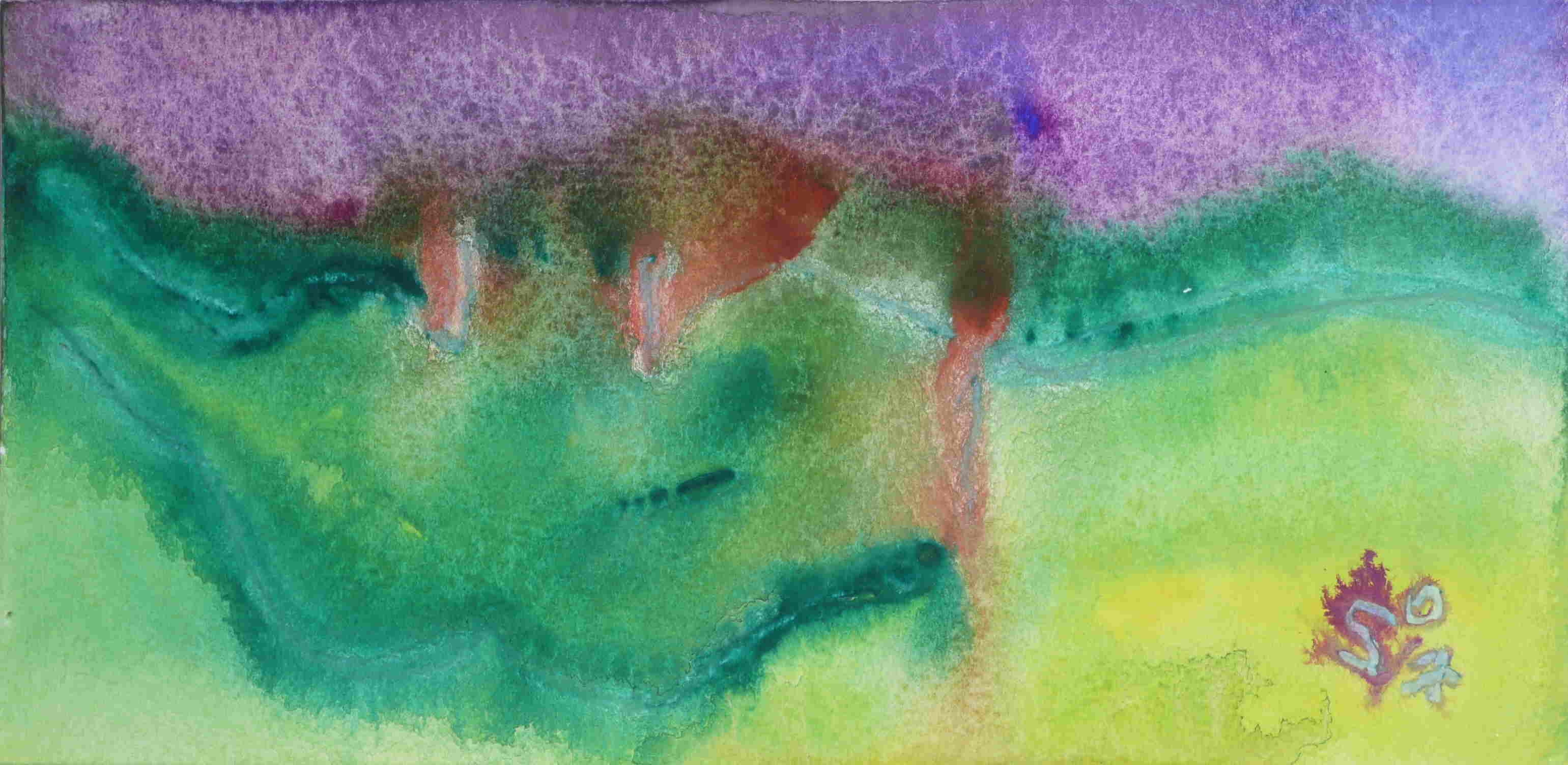
Community is a far country by Shaun Lambert
The rhythm of alternate
Mindfulness/MindFullness can be set at the centre of an alternate rhythm of life. It has an important community aspect within Christianity. It has to do with an aware and attentive rhythm of life that is alternate, that is other-focused.
When our lives are out of rhythm we suffer. If the rhythm of waking and sleeping is off-balance life becomes about mere survival. If in a marriage the rhythm of intimacy, affection and sex is imbalanced or missing then we experience emotional pain and depression. If we do not eat regularly, or we overeat or eat the wrong things we will experience ill-health as well as emotional roller-coaster rides.
But having a rhythm of life is more than just a life-work-home balance. Rhythm is built into the created order – whether it is the rising of the sun or the setting of it. Our bodies run to rhythms from the obvious heart beat, to less obvious beats.
But the rhythm of life we are seeking to establish seeks to do something else – it is a counter-cultural response to the cultural trends of our day – consumerism, individualism and narcissism. These trends make us too busy.
The wisdom about rhythms of life is to be found in the monastic movements both new and old. These rhythms used to be called rules – in the sense that they help us measure what is right and wrong.
How important is a rhythm of life? It is as important as breathing. If we do not live consistently within a spiritual rhythm of life we shall die of spiritual asthma.
There are a number of key scriptures that inform our rhythm, and should inform the discipleship of any Christian. Romans 12:2 tells us that our transformed mind becomes the rule(r) that establishes and tests the rhythm of life for us, ‘Do not conform any longer to the pattern of this world, but be transformed by the renewing of your mind. Then you will be able to test and approve what God’s will is…’
What are we to be transformed into? We find the answer in 2 Corinthians 3:18, ‘And we, who with unveiled faces all reflect the Lord’s glory, are being transformed into his likeness…’ We are looking to create an inner sanctuary that we can carry around with us into all of life. The most famous Rule is that of St Benedict. In his Rule Benedict explains how to live ‘a Christ-centred life with others.’[1]
What makes up a rhythm of life and enables us to pay attention to the priorities of Christian faith and develop the awareness that can test what God’s will is for our lives? I have been looking at different communities to see how they live together; including Taize in France, the Bose community in Italy, The Moot in London, and the mayBe community. This is to try and answer the question, can a congregation be a real community?
Over the last few months we have explored The Moot’s structure to their rhythm of life beginning with spiritual postures – that develop the awareness of God’s presence in our lives. This begins with the idea of spiritual postures. This has been influenced by a brilliant book Faith Postures: Cultivating Christian Mindfulness by Holly Sprink. To The Moot this asks how we are in the present moment, in other words our way of being, not just doing.
An obvious posture is the one that sees the glass half-empty or half-full. The foundational posture is that of faith rather than fear. 2012 has been a year of fear in many ways and we need to daily re-align ourselves with a position of faith not fear.
A posture of faith and not fear needs to make vows, have values that guide the rhythm of life. We believe in a relational God who is presence, and so we are called to be present to each other. So presence to God, to each other, and to the world is a key value that we can vow to maintain.
One of the ways we can be present together is through hospitality. It needs an intentional rhythm. Another way we can be present together is through service.
As we work on a rhythm of alternate we are seeking something elusive, perhaps something we don’t believe in. This is what Abbot Christopher Jamison calls inner freedom, ‘Sometimes the way people speak about the human heart implies that in this interior world there is no freedom, that it is a fixed world that cannot be changed.’[2]
There is freedom and we can find it.
The Moot’s address
Holly Sprink’s book
autumn leaf-thoughts #mindfulness
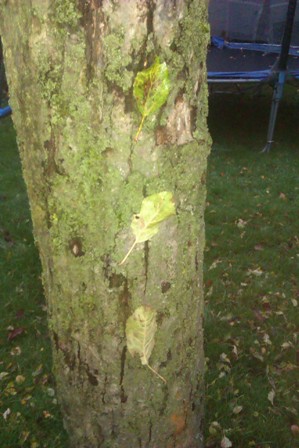
autumn leaf-thoughts
What autumn leaf-thoughts are you clinging on to, that you now need to let go? Something from the past? Autumn leaves tell us that now is the time to let go of many of our unhelpful thoughts we no longer need to ruminate on. Sometimes they are well camouflaged and we don’t spot them.
Thought-boats #mindfulness

thought-boat
Which thought-boats that come into your mind do you hook onto the most, and start ruminating about?
 shaunlambert.co.uk